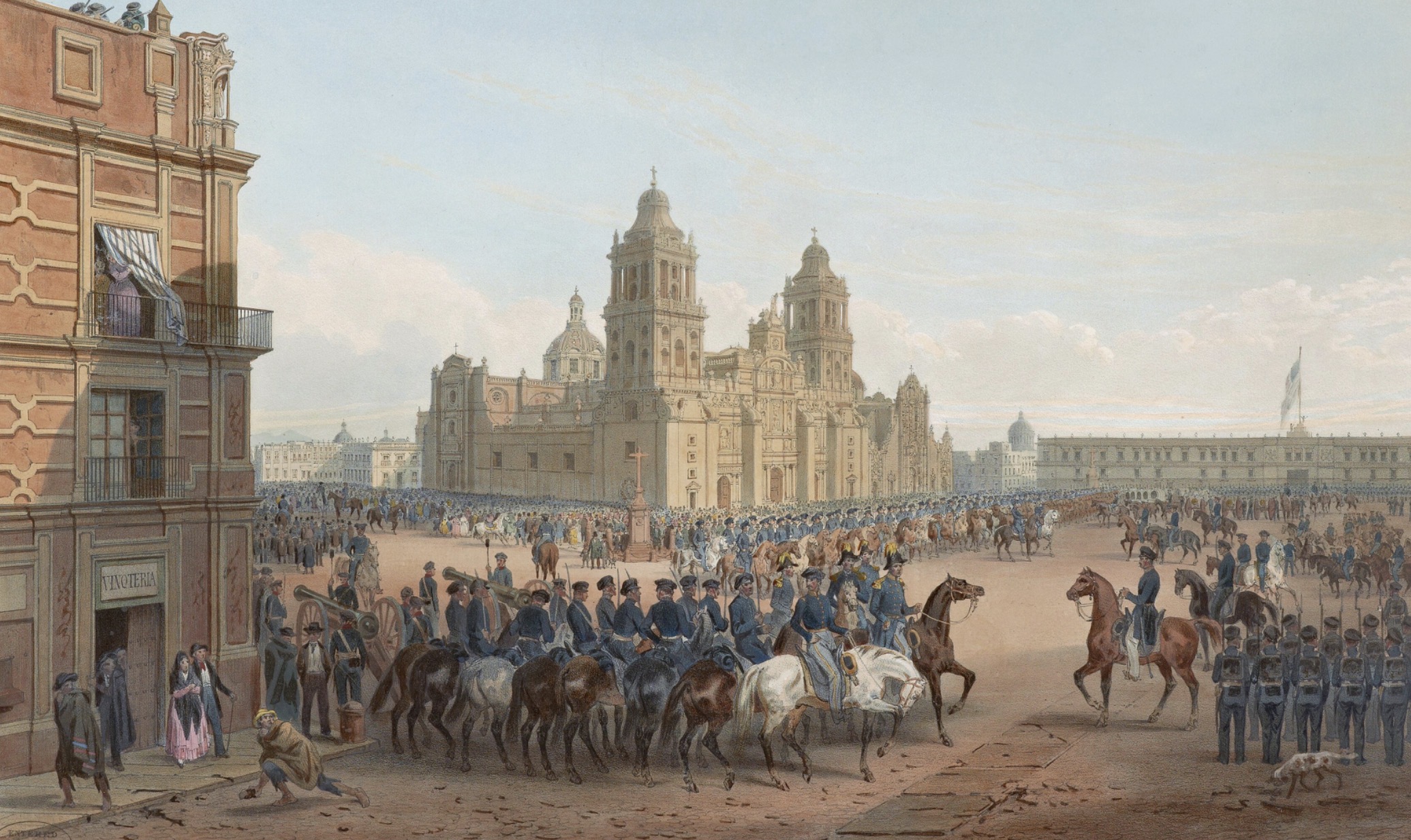
The Mexican-American War (1846–1848) is commonly taught as a story of American expansion and military brilliance. General Winfield Scott landed at Veracruz and marched more than 200 miles inland to capture Mexico City.
That is certainly true, but history is often whitewashed through omission and emphasis rather than fabrication. The most frequently remembered fact about the war may be that it trained a large cadre of officers who later commanded armies in the Civil War.
Robert E. Lee and Ulysses S. Grant served in Mexico. Emphasizing that connection, however, turns the Mexican War into a Civil War prequel rather than an examination of American aggression.
The central question is seldom asked: Did the United States steal the Southwest?
In the strictest legal sense, it did not. Mexico surrendered the territory under the Treaty of Guadalupe Hidalgo in 1848. The United States paid $15 million and assumed up to $3.25 million in claims by American citizens against Mexico.
But a treaty imposed after an invading army has defeated your forces and occupied your capital is not a voluntary sale. It is a surrender at gunpoint. Mexico did not willingly sell California and New Mexico. It relinquished them after losing a war deliberately provoked by a stronger neighbor.
President James K. Polk entered office determined to extend the United States to the Pacific. Mexico rejected his offers to purchase California and New Mexico.
Texas claimed the Rio Grande as its southern boundary. Mexico placed the border about 150 miles farther north at the Nueces River. Polk ordered General Zachary Taylor into the disputed territory between them. Mexico considered the advance an invasion.
When Mexican troops attacked an American patrol in April 1846, Polk declared that Mexico had “invaded our territory and shed American blood upon American soil.” He transformed a clash in disputed territory into an attack on the United States.
Many Americans recognized the deception. Henry Clay condemned the war. Congressman Abraham Lincoln’s “spot resolutions” challenged Polk to prove that the place where blood had been shed belonged to the United States. Frederick Douglass called the conflict “disgraceful, cruel, and iniquitous.” Opposition to the war is not a modern judgment. It existed from the beginning.
Polk got his war.
American forces overwhelmed Mexico. Scott’s campaign was a military masterpiece, but tactical brilliance tells us nothing about the justice of its cause. By concentrating on Scott’s strategy, Taylor’s victories and Lee’s reconnaissance, traditional accounts turn a war of conquest into an adventure story.
The San Patricios illustrate how national memory works. These mostly Irish immigrants deserted the United States Army and fought for Mexico. Captured survivors were court-martialed, and many were hanged. American histories remembered them as traitors—if they remembered them at all. Mexico honors them as defenders against invasion. Mexico honors them as defenders against invasion. In Clifden, Ireland—the birthplace of their commander, John Riley—the Mexican flag is flown annually in their honor.
Mexico similarly commemorates the Niños Héroes, six military cadets who became national symbols after dying in the defense of Chapultepec Castle.
The treaty transferred approximately 525,000 square miles to the United States: California, Nevada and Utah; most of Arizona and New Mexico; and portions of Colorado and Wyoming. Together with Mexico’s relinquishment of its claim to Texas, the settlement cost Mexico approximately 55 percent of its prewar territory. Although the treaty promised to protect the private property of Mexican nationals, many subsequently lost their land through litigation, taxation, fraud and unfamiliar American legal procedures.
The conquest also intensified the struggle over slavery’s western expansion, helping push the country toward civil war. That connection should be taught.
Grant and Lee both later expressed misgivings about the war’s injustice. Lee later said: “It is true we bullied her. Of that I am ashamed, as she was the weaker party.” Grant called the conflict “one of the most unjust ever waged by a stronger against a weaker nation.” He also connected it directly to the Civil War:
“The Southern rebellion was largely the outgrowth of the Mexican war. Nations, like individuals, are punished for their transgressions. We got our punishment in the most sanguinary and expensive war of modern times.” Grant’s language about national punishment reflected the providential moral vocabulary of his era.
More concretely, the Mexican War helped propel the country toward civil war because the territory acquired from Mexico reopened the explosive question of whether slavery would expand westward.
Most important, in my view, is that a sanitized portrayal of the Mexican War—and its virtual omission from many history textbooks—demonstrates how proponents of American exceptionalism can distort our national narrative without necessarily inventing facts. Scott really did conduct a brilliant campaign, and the war really did train future Civil War commanders. The whitewashing comes from allowing those facts to obscure the central reality: the United States deliberately provoked a war against a weaker neighbor and emerged with more than half of Mexico’s prewar territory.
“Wicked War, Future Generals, and Mexican Memory” is the second chapter in the book Hallowed Ground.
The featured image depicts American troops entering Mexico City on September 14, 1847, in Carl Nebel’s 1851 lithograph. Americans remembered military triumph and Manifest Destiny; Mexicans remembered invasion and occupation. (Public domain)
“The war itself is strangely located in United States history; it is understood by historians as profoundly consequential to national development and yet is understudied at every educational level.”
—María Carla Sánchez, “The US-Mexico War, la Frontera, and Their Afterlives,” Latin American Research Review
Leave a Reply