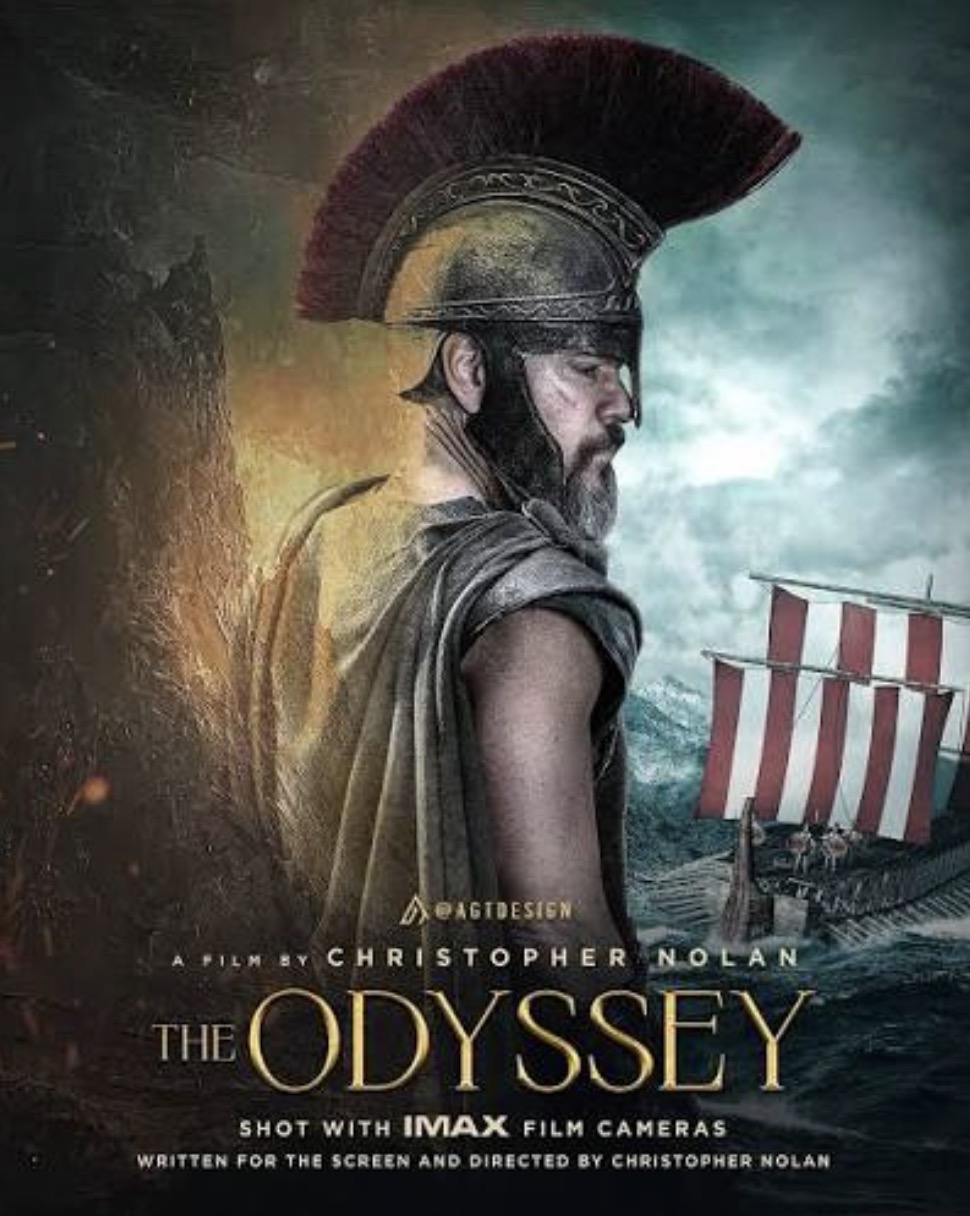
The sizzling hot movie in the hot mid-summer of 2026 was Christopher Nolan’s The Odyssey, a retelling of the Homer epic. The movie ranked very high on filmmaking, less well on storytelling, in my take.
It prompted me to revisit another retelling of the adventures of Odysseus, albeit one far more challenging, the novel Ulysses by James Joyce. For a very long time, I’ve felt like I needed to read and understand Joyce. Poet T. S. Eliot called Ulysses “the most important expression which the present age has found” and said it was a book “from which none of us can escape.” The Modern Library’s 1998 board ranked Ulysses #1 among the 100 best English-language novels of the 20th century.
But the book, to me at least, is virtually impenetrable, from stream of consciousness to obscure (and constant) historical and religious references. What fun is it to read a book if you must consult annotations every fifteen words?
Yet underlying the intellectual gymnastics is a moving, powerful story of humanity focusing on three people: Stephen Dedalus, Leopold Bloom, and Bloom’s wife Molly.
Joyce used events in the Odyssey as scaffolding for events of one day in the life of the characters. Yet the Homeric scaffolding was an unnecessary crutch that detracts from the story. Every Homeric event, from the Telemachiad opening through the Cyclops and whirlpool episodes, feels odd and forced. And Joyce totally abandons the ending, exposing the structure as an artifice he used to impress his intellectual friends and bedevil future scholars. Of course, that view would have earned me an F in any Ivy League lit class where elite professors have made a living with what they consider erudite explanations of every weird nuance of the novel.
One example is the episode in the chapter conventionally called “Scylla and Charybdis.” Stephen Dedalus explains his cockeyed interpretation of the play Hamlet to a group of Irish literati. Gertrude, for example, becomes Shakespeare’s wife, Anne Hathaway, whose supposed adultery Stephen connects with Shakespeare’s brothers, particularly Richard. Of course, it’s pure made-up silliness.
How does it fit in the book?
Well, it doesn’t. Joyce had earlier delivered a series of lectures on his theories on Hamlet. No copies of the actual lectures exist, but many notes made by Joyce held by Cornell University show that Stephen expounded Joyce’s earlier views.
Whatever his motivation, Joyce’s relentless deployment of Homer, Shakespeare, Aristotle and countless other references often feels less like storytelling than a demonstration of intellectual firepower.
The real story of the three misfit principal characters remains powerful. The short stories in Dubliners, particularly “The Dead,” demonstrated the power of Joyce’s writing ability without the intellectual acrobatics.
And there is a parallel with the new Christopher Nolan movie. He also used “gimmicks” of a cinematic sort in an effort to boost his standing with the cinematic elite. I’m referring to his use of IMAX 70-mm film. Only about 25 U.S. theaters out of 5,800 could show The Odyssey in its full IMAX 70mm film format.
Joyce didn’t need Homer to prove he was Joyce, just as Nolan doesn’t need IMAX 70mm to prove he is Nolan.
Leave a Reply